- asiabits
- Posts
- 🟠 Why Chinese storm US supermarkets
🟠 Why Chinese storm US supermarkets
Reading time: 4 min 18 sec
In partnership with


Today’s edition is written by:
Anna, Michael & Thomas
☕️ Good morning, friends,
the year is slowly coming to an end, and we just want to say thank you.
What started as a small project over the summer has now grown into a community of more than 10,000 people worldwide.
We have big plans for 2026 and are excited to have you with us! 🧡
SHARING IS CARING

👉 One friend, one click, your China Starter Kit!
Recommend asiabits to a friend or colleague and the ultimate China guide will land straight in your inbox. And thanks to you, we keep growing. 🧡
https://news-en.asiabits.com/subscribe?ref=PLACEHOLDER

Highlights: Japan’s market failed to gain traction despite surprisingly strong export data, with the Nikkei finishing flat. In China, momentum suddenly picked up. Hardware and tech stocks, alongside IPO optimism, pushed the CSI 300 sharply higher, sparking its strongest rally in months. The tech-heavy ChiNext Index jumped more than 3%.
TOP BIT
🇨🇳 China Poker: Why Starbucks retreats and Costco booms

Fanta-stic prospects for Sam’s Club & Co.
While US fast-food giants are dumping their stakes in frustration, American warehouse clubs are seeing real customer rushes.
The winning formula: exclusivity, curated products, fair prices, and ultra-fast delivery.
Details
☕️ A bitter aftertaste: Starbucks is selling 60 percent of its China business to a local investor, and Burger King is also largely giving up control.
US headquarters are often too slow to keep up with the brutal pace of innovation set by local competitors like Luckin Coffee.
🛒 The club kings: Walmart, by contrast, is seeing the biggest boom in its history with Sam’s Club and plans 10 new openings in China this year alone.
🏷️ Privilege with a price tag: Sam’s Club and Costco filter customers through membership fees. Those who pay get selection, quality, and products you cannot find elsewhere.
📦 Shopping as a theme park: China’s middle class loves the curated assortment and treats the family trip to the giant warehouse as a welcome counterpoint to pure online shopping.
🧱 Hard to copy, even for Alibaba: Local attempts at membership retail have so far failed or remained regionally limited. The model requires discipline, assortment depth, and trust. Things that do not scale easily.
Background
China’s consumer market is under pressure, but it is not dead. Shoppers are spending less, but more deliberately. Warehouse clubs hit that nerve.
Traditional chains with interchangeable offerings are coming under pressure, especially when local players are faster and cheaper.
📊 All Details & Data: CNBC, China Daily, TechNode
OUR PARTNER
Shoppers are adding to cart for the holidays

Over the next year, Roku predicts that 100% of the streaming audience will see ads. For growth marketers in 2026, CTV will remain an important “safe space” as AI creates widespread disruption in the search and social channels. Plus, easier access to self-serve CTV ad buying tools and targeting options will lead to a surge in locally-targeted streaming campaigns.
Read our guide to find out why growth marketers should make sure CTV is part of their 2026 media mix.
NUMBER OF THE DAY

That’s how large the share of Vietnam’s population is now covered by 5G.
📶 Rapid rollout: Just one year after commercial launch in October 2024, 5G already reaches nearly 60% of the population. Vietnam ranks 10th globally for fixed broadband speed and 15th for mobile internet speed.
📱 Digital everyday life: Around 80 million Vietnamese are online, spending about seven hours a day on the internet on average. In Southeast Asia, three out of five people shop online, and more than 60% of payments are digital.
Watch: The faster networks, payments, and e-government scale, the faster the digital economy grows. But the next bottleneck is already on the agenda: cybersecurity and clear rules. If trust and protection fail to keep pace, growth will slow despite strong coverage.
MARKET BIT
⚒️ Strategic smelting: Korea Zinc builds America’s new metal alliance

Not just critical to use for bibimbap: Korean metals move onto the geopolitical menu
🤝 Billion-dollar alliance: Korea Zinc, the world’s largest zinc refiner, plans to invest up to USD 11bn in a critical-metals refinery project in Tennessee. The Pentagon will hold a 40% stake in the JV and help finance the build via loans and CHIPS Act subsidies.
⚙️ Tennessee turns high-tech furnace: From 2029, the plant is set to produce 540,000 tons of strategic metals annually, from zinc and copper to germanium, gallium, and antimony—key inputs for AI, chips, defense systems, and cars.
🇺🇸 Supply-Chain sovereignty: After China’s 2024 export ban on germanium and antimony, Washington is pushing hard on raw-materials policy. The project is part of the new U.S. strategy and marks the first large zinc smelter built in the U.S. since the 1970s.
🇰🇷 Shareholder power struggle: Major shareholders MBK Partners and Young Poong accuse CEO Choi of using the JV to secure backing. They threaten lawsuits over the capital increase and warn of a loss of “zinc sovereignty.”
📉 Rally, then whiplash: The stock initially jumped 26% before falling 13%. Supporters see a historic opportunity; critics see a geopolitical power play with Washington entering the shareholder base.
Background
The deal reflects the geopolitical reshuffling of raw-materials supply chains. The U.S. is rapidly building domestic capacity for critical metals needed for defense, chips, AI, power grids, and data centers, while cutting dependence on China. For Korea Zinc, this is less about expansion and more about securing a gateway into the U.S. industrial complex, complete with offtake, funding, and political backing.
👉🏻 Full Story: Nikkei, Chosun, CNBC, Yonhap News
HEAD OF THE DAY
🇭🇰 Sonia Cheng 鄭志雯
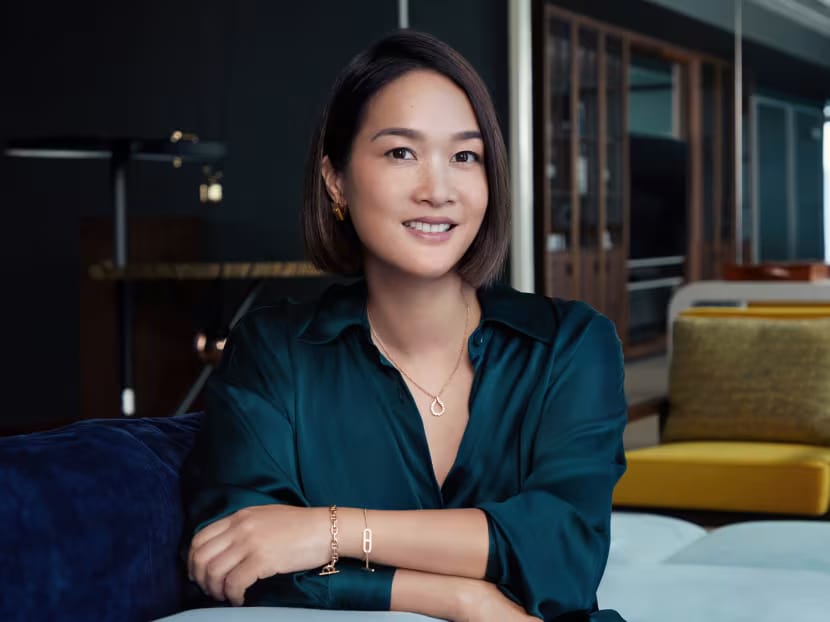
The woman behind Rosewood’s rise
In a male-dominated world of hospitality leaders, Rosewood Hotel Group CEO Sonia Cheng (33) is shaking up global luxury, turning a family legacy into a multi-billion-dollar empire.
Cheng follows a familiar pattern: inherit a legacy business → modernise it for a new generation → scale through culture, not volume.
💡 The power of local roots: By empowering local chefs, designers, and cultural curators, Cheng turned individual hotels into global benchmarks.
Rosewood now spans 58 properties worldwide under her leadership, with Rosewood Hong Kong — named No.1 in the World’s Best Hotels 2025 — valued at ~HK$15.9 billion (~USD 2 billion) alone.
OUR PARTNER

HIGHLIGHTS
🍺 Asahi scores big as Diageo taps out in East Africa: The UK spirits giant is offloading its majority stake in East Africa for US$2.3 billion. The deal gives Japan’s Asahi a major foothold in the East African market, covering operations in Kenya, Tanzania, and Uganda, and includes agreements to continue producing and distributing Diageo brands. The announcement was welcomed by investors, with shares rising on both sides.
🔋Clash sparks in EV World as LG Energy Solution ends Ford contract: South Korea’s leading battery maker has canceled a 9.6 trillion‑won ($7.2 billion) supply contract with Ford, citing performance issues and payment disputes. The termination exposes tensions between Korean suppliers and global automakers, and could reshape future battery partnerships as companies weigh quality, reliability, and commercial terms in the fast-growing EV market.
🌳 Trees, tea, liquor as coins: Chinese companies are turning rare woods, premium tea, and even baijiu into digital tokens to raise new capital. Through so-called real-world assets, physical goods are being made tradable, mainly via the more liberal financial hub of Hong Kong. While investors are enthusiastic, regulators in Beijing are watching the boom skeptically and warning of fraud and legal gray areas.
COUNTRY READS
🇰🇷 Seoul is rewarding households that cut food waste with points redeemable like cash to curb a growing environmental problem. More on this.
🇨🇳 Wealthy Chinese show little interest in Trump’s Gold Card program. More on this.
🇺🇸 The US has collected around $1 billion in customs revenue from parcels shipped from ChinasSince closing the so-called de minimis loophole. More on this.
BITS TO DO
✅ Spoil your friends and family with a DIY hotpot night.
✅ Dream about this luxury Japan train adventure for just US$40,000.
✅ Feel inspired by the holiday gift guide and score all your Christmas gifts.
✅ Get ready for Avatar: Fire and Ash, finally hitting the theatres.
✅ Buy an ugly Asian Christmas sweater for the entire family.
FORTUNE COOKIE
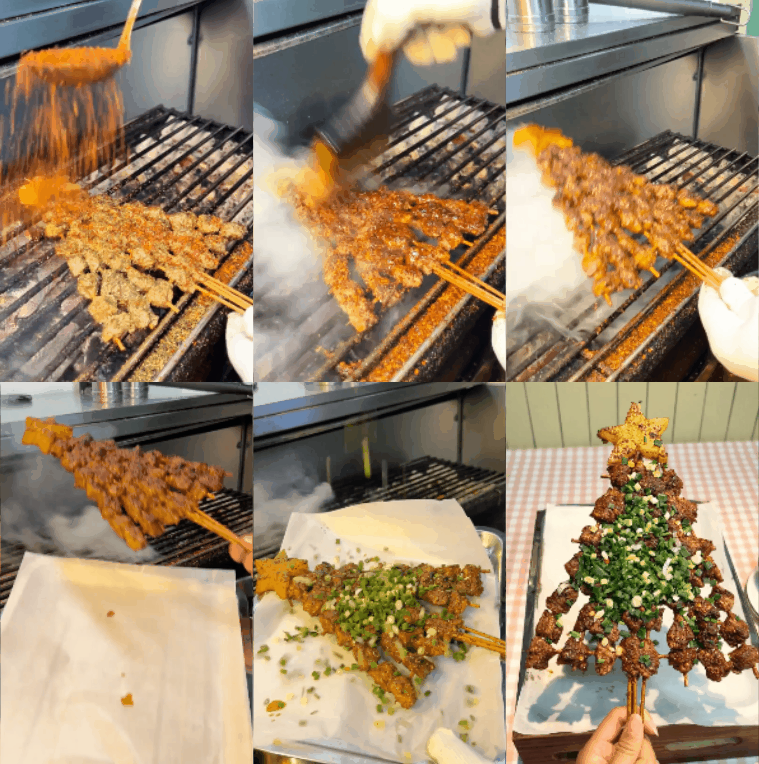
Christmas, but make it Chinese! 🎄
MORE ASIABITS
All the latest AI trends from Asia — every Wednesday, exclusively with us.
Champagne & Chopsticks — your Sunday guide to Asia’s best insider spots.
CAREER BITS
🌏 Xiaomi: E-Commerce Sales Intern, Singapore
🌏 IBM: Business Analyst-2025 graduate, Beijing
🌏 Alibaba: Influencer-Marketing, Seoul
🌏 Ericsson: Future Star-Account Manager, Beijing
🌏 Gap Inc.: Junior Operations Specialist, Tokyo
🌏 Databricks: Business Development Representative, Seoul
🌏 OpenAI: Community Lead, Singapore
🌏 Uber: Account Executive, Taipei
🌏 Sea: Partner Strategy & Operations Associate, Singapore
🌏 Thales: Business Development Representative (Japan), Chiyoda