- asiabits
- Posts
- 🟠 South Korea’s chip war plan revealed
🟠 South Korea’s chip war plan revealed
Reading time: 4 min 55 sec

Today’s edition is written by:
Michael & Thomas
☕️ Good morning, friends,
here’s a little riddle for this beautiful Thursday:
Who said: "Just shut your mouths. Invest everything in me!"? |
SHARING IS CARING

👉 One friend, one click, your China Starter Kit!
Recommend asiabits to a friend or colleague and the ultimate China guide will land straight in your inbox. And thanks to you, we keep growing. 🧡
https://news-en.asiabits.com/subscribe?ref=PLACEHOLDER

Highlights: Asian markets slipped into the red ahead of the Fed decision. The US central bank did cut rates by 25 basis points to 3.50–3.75% as expected, but it signaled only very cautious further moves for 2026.
The combination of rate uncertainty and sharp volatility in tech and AI stocks continues to weigh on sentiment across Asian markets.
TOP BIT
🇰🇷 South Korea launches the biggest chip program in its history

South Korea has unveiled its semiconductor plan – and it reads like an industrial-policy liberation move.
The country wants to shift from memory champion to AI-chip powerhouse. President Lee calls it a “new leap forward”.
Details
🏗️ Building for the chip future: By 2047, ten new chip fabs are set to be built. Target capacity: 7.9 million wafers per month. Funding comes mainly from industry, supported by fast-tracked deregulation and special legislation.
🧠 From memory to AI: 1.27 trillion won will go into AI chips. Billions more into next-gen memory such as NPUs and processing-in-memory technologies. South Korea no longer wants to be just the memory champion, but to develop its own AI processors.
🗺️ A new chip belt in the south: Gwangju is building a packaging cluster, Busan becomes the hub for power semiconductors, and Gumi focuses on materials and components. Together, they form a new industrial backbone designed to relieve Seoul strategically.
🧪 Talent pipeline and tech testbed: By 2030, ten specialized semiconductor graduate schools will be established. South Korea is also building a national test center for materials and machinery, set to launch in 2027.
🚨 Strategy against dependencies: The government wants to reduce the import share of defense-relevant semiconductors. Today, 99 percent come from abroad. In the future, local players are expected to have priority in security-critical infrastructure.
🥡 Takeaway
AI and chips must become pillars of the security and industrial policy of leading economies. South Korea shows how a coordinated triad of government, companies and research can set the course for technological sovereignty.
📊 All Details & Data: Yonhap, The Korea Herald, Nikkei Asia
IN PARTNERSHIP WITH CATHY TAX
You know what is even scarier than taxes? Taxes in China.
That is why we let Cathy handle all our money business. 👇🏻

Here is why we love working with her:
She takes care of everything that keeps us awake at midnight: accounting, tax filing, bookkeeping, HR, payroll, visas and the mountain of paperwork that comes with doing business in China.
👀 And the best part: Cathy explains complex rules in perfect English and suddenly they make sense.
NUMBER OF THE DAY

That’s how much merchants worldwide saved in 2024 as customers paid with digital wallets instead of cards.
📱 30–50% lower costs: Across Asia, cross-border payments increasingly flow through wallets like Alipay+ and local pay methods. They bypass expensive card networks. Instead of interchange, scheme fees and FX markups, merchants usually pay just a simple service fee.
💸 Fewer fees, higher margins: Specialized cross-border payment platforms bundle wallets and local payment methods and route transactions through domestic channels whenever possible. This lowers fees, stabilizes FX costs, and improves checkout conversion rates.
Watch: 100 USD is always 100 USD for the buyer. For merchants, however, the exact same payment can cost wildly different amounts depending on the country, card type, currency and network. Merchants who optimize payment routing and prioritize wallets cut costs significantly and protect their margins in international business.
Do you rely on digital services for cross-border payments? |
MARKET BIT
🎮 Game Over for margins: Nintendo runs into the worst memory crunch in years

Back then, there was less DRAMa: blow, wiggle, keep playing.
🎮 Minus 14 billion XP: Nintendo’s stock has dropped almost every day in December, wiping out USD 14 billion in market value. The main culprit: exploding memory prices that are eating the Switch 2’s margins alive.
💾 One’s pain, another’s gain: Nintendo now pays 41% more for RAM and 8% more for NAND. Samsung is set to reclaim the global DRAM crown in Q4 and rake in over USD 11.5 billion in memory profit thanks to soaring demand.
📦 Storage squeeze for players: microSD Express cards cost around USD 90 and are hard to find. With the Switch 2’s limited internal storage, many buyers have no choice — pushing up the real cost of the console ecosystem.
🏷️ Early discount raises eyebrows: A Switch 2 + Mario Kart bundle was already USD 50 off on Black Friday. Analysts see the early markdown as a warning sign for demand and inventory levels.
🧊 Chip crisis hits everyone: Samsung is tightening supply, while PC makers like Dell and HP warn of historic component price spikes. Buyers across consumer tech may be in for a costly 2026.
Background
Nintendo’s Switch 2 boom is colliding with the toughest memory shortage in nearly a decade. The global storage showdown has put the entire consumer electronics industry into Hard Mode.
After years of oversupply, Samsung, SK hynix & Co. shifted production toward high-margin HBM to fuel the AI boom — starving the market of standard DRAM and NAND. With AI models, data centers, and smartphones devouring massive memory blocks, gaming consoles sit at the very bottom of the food chain: expensive, but not mission-critical.
👉🏻 Full Story: The Investor, BusinessTimes SG, Bloomberg
HEAD OF THE DAY
🇨🇳 Pang Kang 庞康
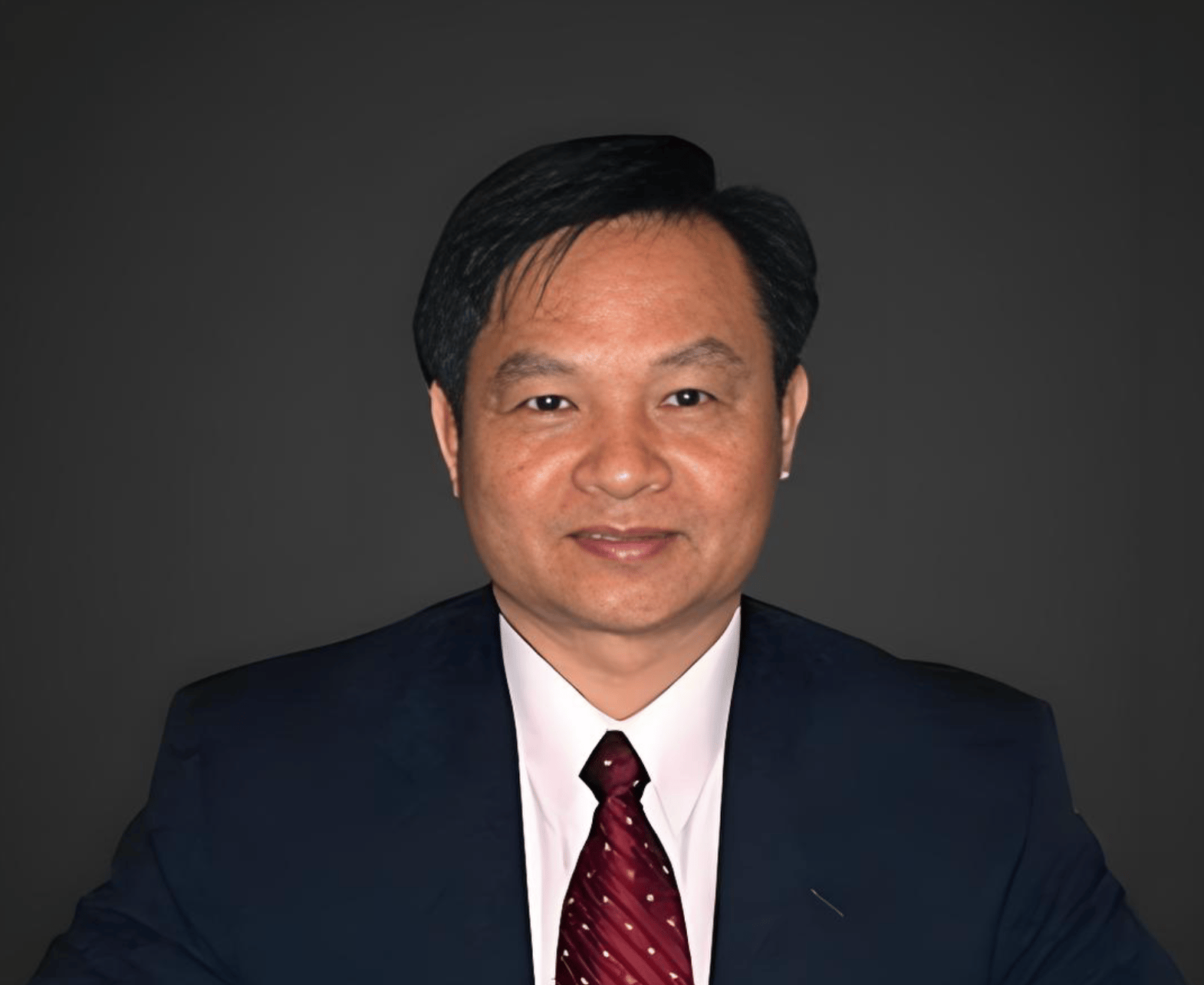
🍜 The man who became a billionaire with soy sauce
Pang Kang turned Foshan Haitian, a traditional soy sauce workshop from the Qing dynasty, into a global flavor powerhouse.
Today, his company sells more than 1,000 products in over 100 countries.
His personal fortune is estimated at 8.3 billion USD.
💡 Lesson learned: You don’t always need to reinvent the wheel. Pang shows how an everyday product can become an extremely profitable business through smart branding, distribution, and scaling.
HIGHLIGHTS
🛒 Amazon sprints ahead in India’s billion-dollar race: The US company plans to invest more than USD 35 billion in India by 2030 to expand e-commerce, cloud services and especially AI infrastructure, in addition to the roughly USD 40 billion that have flowed into the country since 2010. This puts Amazon in line with the investment wave of Microsoft (USD 17.5 billion) and Google (USD 15 billion) and sharpens its competition with Flipkart, Reliance and others. The goal is to increase Indian sellers’ exports from USD 20 billion to USD 80 billion and to create around 1 million additional jobs.
💉 South Korea ends beauty VAT refunds for foreigners: The 10% VAT rebate on cosmetic procedures such as eyelid surgery, Botox or breast augmentation will expire on December 31. This incentive pushed foreign-patient spending from roughly USD 270 million to USD 840 million, with about 77% now attributable to aesthetic treatments. Clinics fear higher prices and customers shifting to China or Southeast Asia. Economists are less concerned and point to the weak won and generally strong demand for Korea’s beauty-medicine industry.
🛰️ China opens satellite super-factory to challenge Starlink: A new facility in Wenchang is beginning operations that can produce up to 1,000 satellites per year. This is a central element in Beijing’s plan to catch up with Elon Musk’s Starlink. The “factory to launch” pipeline allows satellites to move from assembly to launch pad within hours. China’s space sector is gaining momentum but counts only 80 launches in 2025, compared with SpaceX’s 146 missions by November.
COUNTRY READS
🇨🇳 Chinese electronics company Tianyouwei buys insolvent German auto supplier for 1 million euros. More here.
🇮🇳 E-commerce giant Meesho surges 58 % on its market debut with a valuation of 8.8 billion USD. More here.
🇯🇵 Daikin invests 163 million USD in a new US research center focused on cooling for AI data centers. More here.

BITS TO DO
✅ Send money abroad in a flash, get great exchange rates, and manage your FX with our partner Airwallex.**
✅ Don’t eat suckling pig when you are in Hong Kong. Side effects may occur…
✅ Take a ride in a driverless taxi in Shenzhen.
✅ Lean back and let Cathy handle your taxes in China.*
✅ Learn how to make 1 million USD (and then buy an insolvent German auto supplier 😉)
* A message from our partner.
** Airwallex meets the highest international security standards, including PCI DSS, SOC1, and SOC2 compliances. More info here.
FORTUNE COOKIE

👀 Caught in the act!
A half-naked man, a woman in a miniskirt and an irate wife. You can imagine the rest yourself 😉 (or read it here…)
MORE ASIABITS
All the latest AI trends from Asia — every Wednesday, exclusively with us.
Champagne & Chopsticks — your Sunday guide to Asia’s best insider spots.
CAREER BITS
🌏 Roche: Technology Intern , Shanghai
🌏 Red Bull: General Marketing Graduate , Tokyo
🌏 Milano Finanza: Business Analyst , Singapore
🌏 CV. Riset Prima Asia: Junior Research Analyst , Surabaya
🌏 Mercor: Equity Research & IB Analyst , Hongkong
🌏 HSBC: Analyst (Risk and Compliance), Guangzhou
🌏 PT Bank Danamon: Danamon Bankers Trainee (DBT) Program , Jakarta
🌏 Stratégies: Junior Marketing Associate , Singapore
🌏 McKinsey & Company: Knowledge Analyst (Metals & Mining) , Singapore
🌏 Dassault Systèmes: SaaS Sales Expert (2025 China Graduate Program) , Beijing