- asiabits
- Posts
- 🟠 Oil shock: South Korea caps gas prices
🟠 Oil shock: South Korea caps gas prices
+ Philippines: 4-day week

☕️ Good morning friends,
Many in Europe dream of the 4-day week. In the Philippines, it's now mandatory reality. But few are happy about it… More on that in today's Top Bit.
Also in today's issue:
South Korea: Fuel prices capped for the first time in 30 years
CATL: $10.4B net profit, +42% - energy storage as key driver
Tata: $7,000 EV hits the Indian market
P.S. Our team has published three new free guides.
China, Japan, Korea: What you need to know before doing business there. Read now.

Asia’s markets in free fall: the Nikkei lost 5.2%, the KOSPI 6%. The circuit breaker was triggered again, Brent briefly jumped to nearly $119 per barrel intraday, but then fell back sharply and closed at $93.
A reverse move in China: mainland investors bought a record $4.8 billion worth of Hong Kong stocks through Stock Connect. The Hang Seng limited its loss to 1.4%.

TOP BIT
For the first time in 30 years: South Korea caps fuel prices
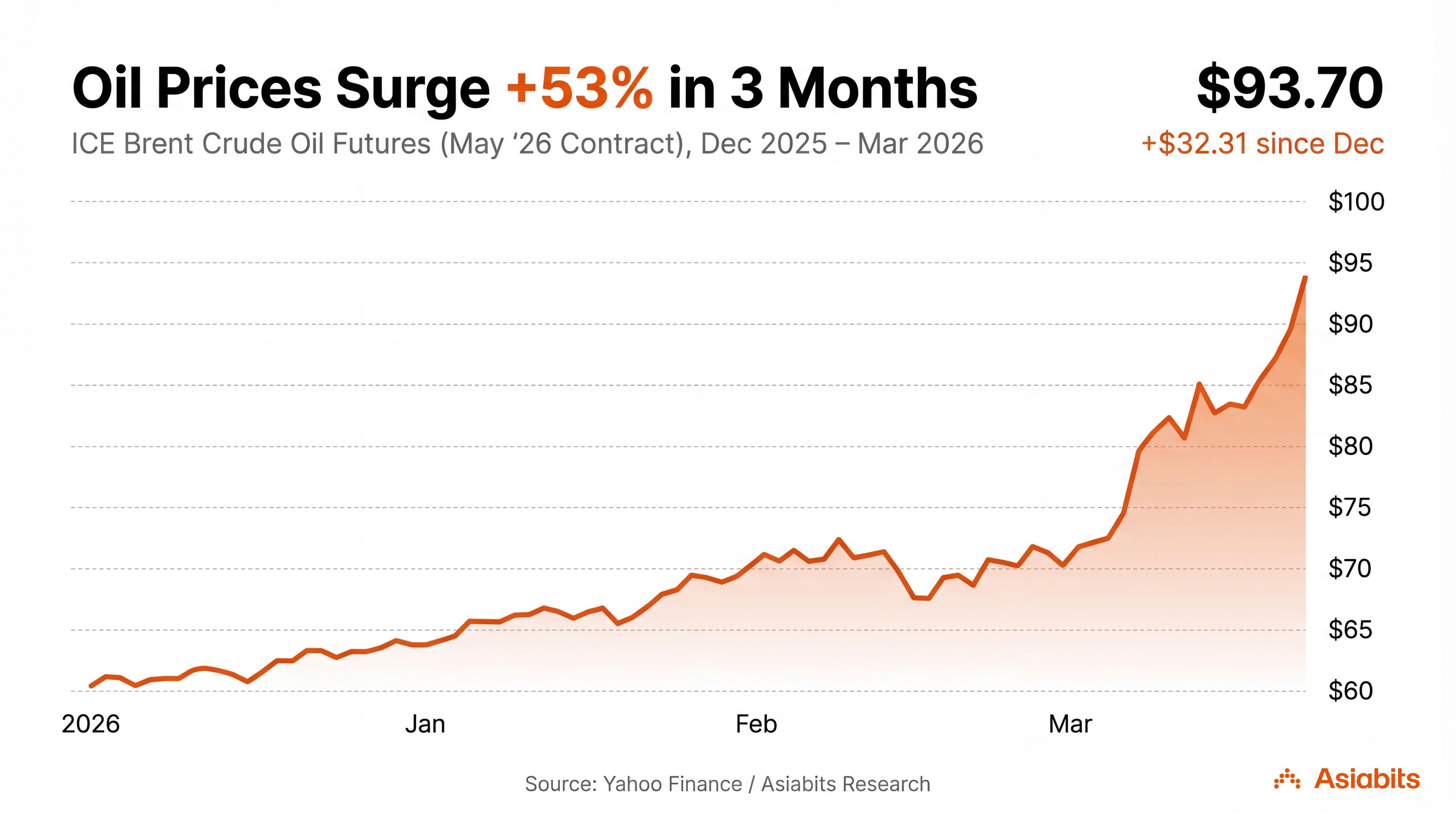
South Korea's President Lee Jae Myung ordered something on Monday that hasn't happened since the 1990s: a state price cap on gasoline and diesel.
The reason: The Iran crisis has driven the oil price to over $118 per barrel, and South Korea sources around 70% of its crude oil from the Middle East.
The price shock
The government will implement a system of maximum prices for petroleum products to protect the domestic economy from the energy shock.
"The crisis is a significant burden on our economy, which is heavily dependent on global trade and energy imports from the Middle East."
All of Asia suffers
Country | Measure | Strategic focus |
|---|---|---|
South Korea | Fuel price cap | Dampening inflation & market stability. |
Philippines | 4-day work week | Reducing energy consumption among civil servants by 10–20%. |
Vietnam | Zero tariffs on imports | Elimination of all fuel tariffs until end of April. |
Japan | Reserve release | Preparation to use reserves (254 days of consumption). |
China as relative winner?
While South Korea and Japan are extremely vulnerable, China (although the largest importer) is better buffered.
Beijing has massively hoarded crude oil over the past year and has greater capacity to substitute oil with coal or natural gas. The crisis could thus paradoxically strengthen Beijing in the regional power balance vis-à-vis its rivals.
📊 All details & data: CNBC, The Globe and Mail
OUR PARTNER
Leadership Can’t Be Automated

AI can help you move faster, but real leadership still requires human judgment.
The free resource 5 Traits AI Can’t Replace explains the traits leaders must protect in an AI-driven world and why BELAY Executive Assistants are built to support them.
MARKET BIT
CATL breaks the $10 billion profit mark: battery king pulls further ahead
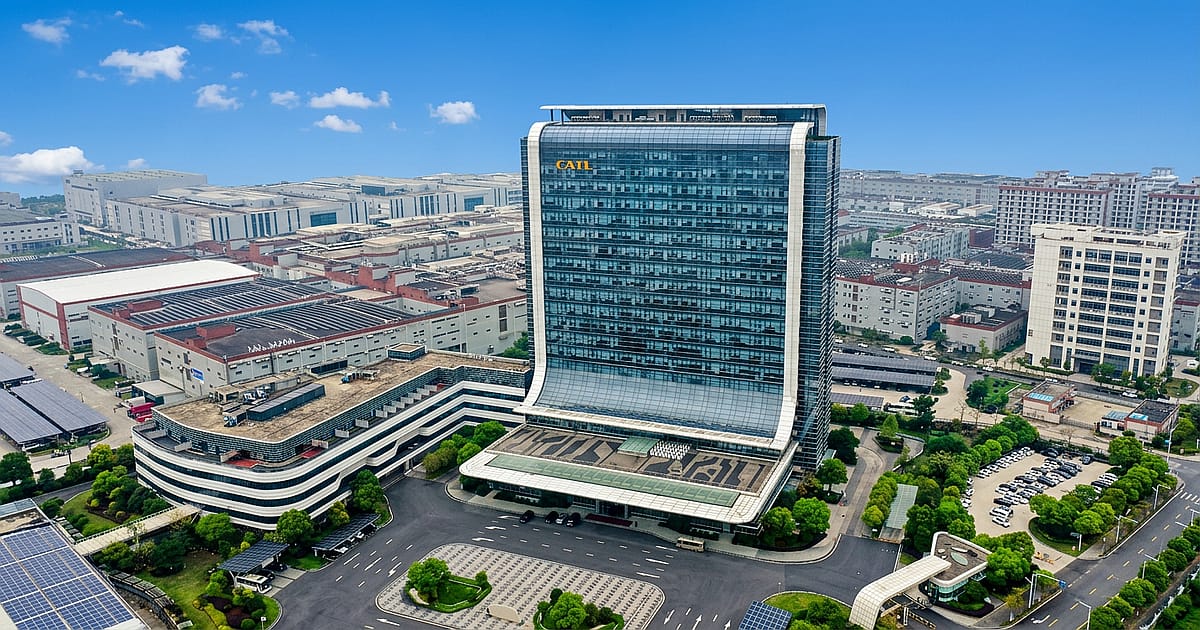
The world’s largest EV battery maker, CATL, posted record 2025 revenue of 423.7 billion yuan ($61 billion), up 17% from the previous year.
Net profit came in at 72.2 billion yuan ($10.4 billion), up 42.3%, marking the fastest profit growth in three years.
Q4 alone: profit jumped 57.1% to $3.35 billion.
The details
It is the ninth consecutive year at the top for battery giant CATL.
Battery sales: 661 GWh (+39%). Of that, 541 GWh were EV batteries, up 41.85%.
Global EV battery market share: 39.2%.
BYD stands at 16.4%, less than half.
The more interesting part lies outside the core business: in energy storage, gross margin reached 26.7%, above the 23.8% in the EV battery business.
The reason: AI data centers and power grids are driving demand, and the segment now accounts for 14.7% of total revenue.
Despite Trump’s tough stance on China: Ford wants to use CATL’s licensed technology to expand its own energy storage production. JPMorgan sees this as a growing foothold in the US market.
CATL vs. BYD:
BYD last week unveiled its new Blade Battery, which is supposed to deliver 1,000 km of range after nine minutes of charging.
CATL’s Shenxing cell delivers 520 km after five minutes. At the same time, CATL is developing batteries for trucks, ships, and aircraft.
Where this is heading
Founder Robin Zeng himself warns that geopolitics, industry cycles, and technological disruption are overlapping. The fact that CATL is now generating higher margins in storage than in its core business shows the direction: away from pure volume chasing in EV batteries, and toward high margin infrastructure deals.
👉 Sources: SCMP, DealStreetAsia, Nikkei, BusinessTimes
NUMBER OF THE WEEK

That's how long it's been since a Taiwanese premier publicly visited Japan.
Baseball Diplomacy: Premier Cho Jung-tai traveled to Tokyo on Saturday to cheer on Taiwan's team at the WBC. He paid for the trip himself, stressing: "My only objective was to cheer for Team Taiwan."
Sensitive: Tokyo and Taipei have had no diplomatic relations since 1972. Prime Minister Takaichi declared in November that Japan could intervene militarily in a conflict over Taiwan. Beijing responded with travel warnings and export controls.
A baseball game as a geopolitical statement: quiet enough to dismiss as a private trip, loud enough for Beijing to take notice.
HIGHLIGHTS
🇮🇳 Tata attacks India's EV market with $7,000 car: The Indian automaker launched the revamped Punch EV starting at around $7,000, made possible by a battery-as-a-service model where customers pay for the battery separately. India's protectionist policies play into Tata's hands: high import tariffs and rejected investment bids from BYD keep foreign competition at bay. Tata currently holds about 40% of India's EV market.
🇨🇳 Xpeng wants to skip Level 3 entirely: CEO He Xiaopeng says his company is "nearly five times ahead" of top industry players in autonomous driving. After unveiling Xpeng's second-generation VLA model, he laid out an aggressive roadmap: skip Level 3 and go straight for full autonomy. Xpeng no longer frames the technology as software in a car, but as "AI agents deployed in the physical world."
🇨🇳 Xunce doubles revenue on AI data boom: The Shenzhen-based company, dubbed China's Palantir by analysts, roughly doubled its 2025 revenue to around 1.28 billion yuan (179.6 million USD), up 103% year-on-year. The driver is surging demand for data infrastructure fueled by the LLM boom. Xunce is positioning itself as the backbone of China's AI data centers.
🇯🇵 Former Google researcher builds robotics startup in Tokyo: Jad Tarifi, who built Google's first generative AI team in 2013, wants to reshape Japan's industrial robot supply chain with his startup Integral AI. The 15-person company already works with supplier Denso and is in talks with Toyota, Sony, Honda, and Nissan. Japan produces 29% of the world's industrial robots but lags behind in AI. Integral is now seeking $10 million in a new funding round.
MORE ASIABITS
Free guide: AI Automation for Beginners
Humanoid Robotics Report: The $6 Billion Bet
Interactive tool: China Dependency Index™
YOUR FEEDBACK
How do you like today's briefing? |