- asiabits
- Posts
- 🟠 Nvidia back in China
🟠 Nvidia back in China
Beijing and Washington give green light

☕️ Good morning friends,
Donald Trump isn't coming to China after all for now… We think it's a shame, he always provides interesting news and interesting pictures. But postponed doesn't mean canceled.
In today's issue:
Nvidia back in China
Foxconn snaps up 50% of Mitsubishi Auto
VW and XPeng roll first joint e-car off the line
Enjoy reading! 📰
P.S. Our partner CEIBS shows on March 25 in Shanghai how to take your career to the next level.
And the best part? We'll be there too. Register here.
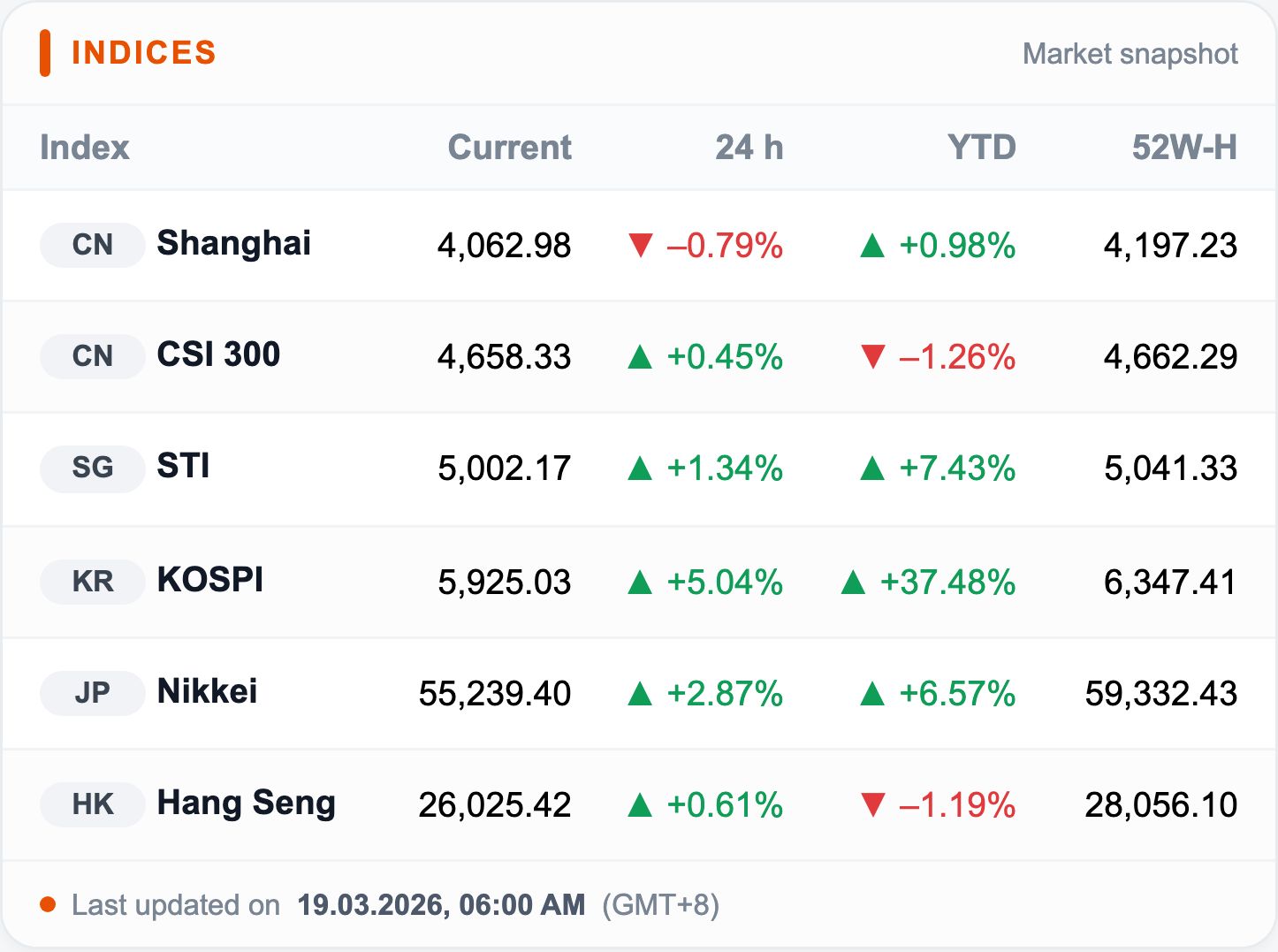
KOSPI jumps 5%, Samsung back above 200,000 won: South Korea's benchmark index posted its strongest daily gain in months on Wednesday, fueled by a chip rally after Nvidia's GTC conference and Micron's record earnings. Samsung announced a special dividend and a 16 trillion won share buyback at its annual shareholders meeting.
TOP BIT
Nvidia back in China: H200 + Groq chips approved
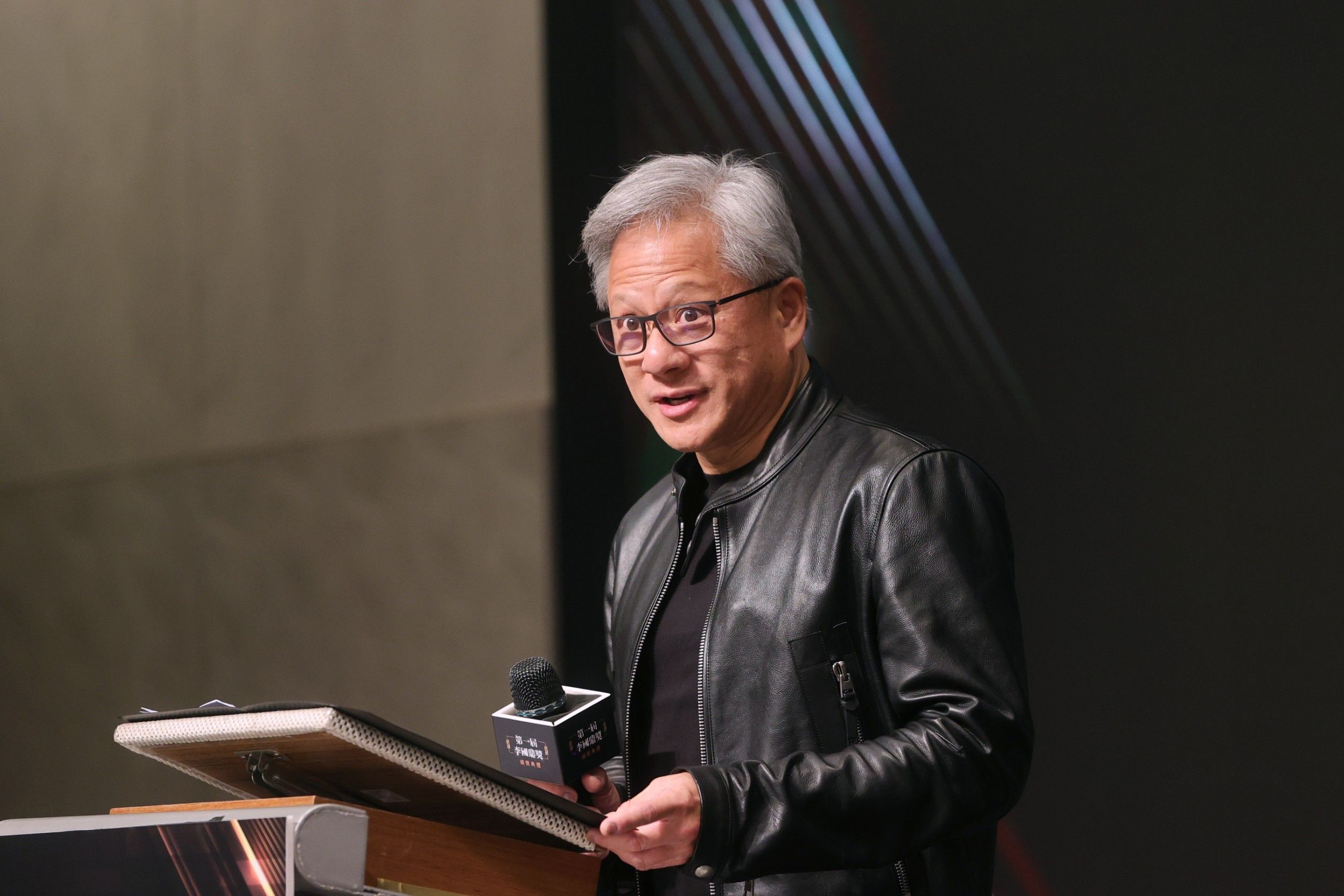
Nvidia has resumed production of H200 chips for China.
"We have received purchase orders from many customers. Our supply chain is ramping up."
The breakthrough after months of regulatory stalemate: Both the US and China have given the green light.
The numbers
China used to account for 13-20% of Nvidia's datacenter revenue. In April 2025, Trump imposed export licenses → $5.5 billion charge. In February 2026, the US approved "small quantities" of H200 for specific China customers.
The problem: Beijing blocked imports, wanted to push domestic chips from Huawei.
Now: Green light for ByteDance, Tencent, Alibaba, and DeepSeek (January pre-approval being finalized).
Chip matrix for the China market
Chip type | Function | Status / Availability |
|---|---|---|
H200 | Training & Inference | Approved; production running again. |
Groq (China var.) | Specialized Inference | In progress; release planned for May. |
Vera Rubin | Next flagship gen | Ban; export still strictly prohibited. |
OpenClaw hype fuels stock markets
A side note from Jensen Huang at the GTC conference in San Jose acted like an accelerant for Asian tech stocks. He called the autonomous agent OpenClaw the "next ChatGPT."
Stock rally: Chinese AI upstarts like MiniMax and Zhipu AI subsequently recorded price jumps of almost 20%. Experts see this enthusiasm as proof of a turning point in Asian AI application.

MARKET BIT
Foxconn snaps up 50% of Mitsubishi's $5.8 billion auto division
Mitsubishi Electric is selling half of its automotive subsidiary Mitsubishi Electric Mobility to Foxconn.
Division revenue in FY2025: ¥919.2 billion ($5.8 billion).
Focus: alternators and starters.
The details
Mitsubishi Electric had originally considered withdrawing completely from the auto parts business. Instead, the choice fell on a joint venture with Foxconn, whose cost advantages in manufacturing are intended to strengthen the competitive position.
Foxconn's Japan strategy
The deal joins a series of partnerships. In January, Foxconn and Mitsubishi Fuso founded a joint venture for electric buses to be built at Fuso's plant in Japan.
In 2024, Foxconn had already acquired 50% of a ZF chassis subsidiary in Germany. Chair Young Liu has openly stated that he sees all major Japanese automakers as potential customers.
Foxconn's calculation
The attempt to directly buy into Japanese OEMs failed in 2025 due to institutional resistance (Nissan).
The new strategy: work your way into the system through suppliers and components instead of going through the front door. Component business and commercial vehicle JVs are financially harder to reject than a hostile takeover.
Whether Foxconn actually becomes a contract manufacturer for the automotive industry depends on whether Japanese OEMs are willing long-term to source core components from Taiwan. So far, they prefer to buy from themselves.
Sources: Automotive World, MSN
HIGHLIGHTS
🇯🇵 Japan and US dig for rare earths in the Pacific: At the upcoming summit between Prime Minister Ishiba and President Trump, an agreement for joint development of deep-sea rare earths is to be signed. An estimated over 200 million tons of rare earth-containing mud are stored off the coast of Minamitorishima. Japan wants to advance commercial extraction with US technology.
🇨🇳 VW and XPeng roll first joint e-car off the line: Mass production of the first electric SUV from the VW-XPeng cooperation has started in Hefei. The vehicle is based on XPeng's platform and is scheduled to hit the Chinese market in the second quarter. For VW, the joint EV is an attempt to regain ground in China's fiercely contested EV market after the group recently lost market share there.
🇰🇷 Samsung SDI secures billion-dollar deal for battery storage in the US: Samsung SDI has signed a contract worth $1 billion to supply ESS batteries (energy storage systems) in the US. The deal underscores growing demand for stationary storage solutions in the US market, where the expansion of renewable energies is driving the need for large-scale storage.
🇨🇦 Geely targets Canada: Following a new trade agreement allowing Chinese EVs into Canada, Geely is positioning itself as one of the first Chinese manufacturers for the Canadian market. Through its brands Polestar and Volvo, the group already has a presence there. Now cheaper models could follow as well.
MORE ASIABITS
Free guide: AI Automation for Beginners
Humanoid Robotics Report: The $6 Billion Bet
Interactive tool: China Dependency Index™
YOUR FEEDBACK
How do you like today's briefing? |