- asiabits
- Posts
- 🟠 Japan's toilet makers are now AI companies
🟠 Japan's toilet makers are now AI companies
Reading time: 4 min 21 sec
In partnership with


☕️ Good morning friends,
Thanks to your feedback, we are becoming even better, more compact, and more relevant starting right now.
Stay tuned! There’s a lot of new stuff coming over the next few weeks.
In today’s edition:
🟠 Why toilet maker Toto is benefiting from the chip boom.
🟠 TikTok saved — the details behind the new US joint venture structure.
Also inside: China’s tech role in Ukraine, Japan’s 600 km/h train, and Google’s Sakana AI deal.
Enjoy the read! 📰
👉🏻 Follow us on LinkedIn and Instagram for even more info on business in Asia: infographics, guides, and videos.
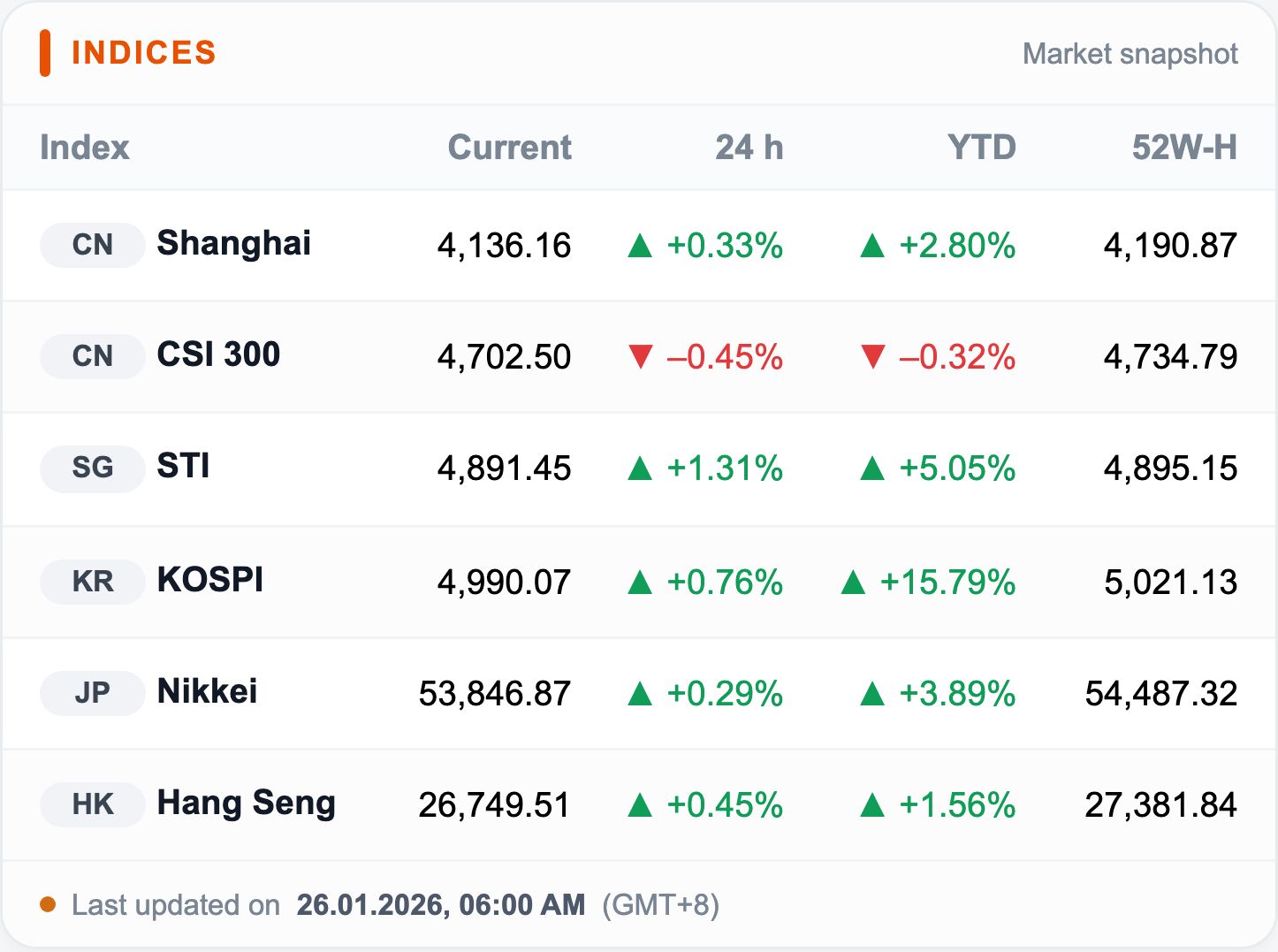
KOSPI 5,000 milestone: South Korea’s benchmark index extends its record run, rising above 5,020 points for the first time. Institutional investors took the lead while foreigners kept selling. Heavyweights like Samsung helped keep the market steady.
TOP BIT
🚽 AI flushes billions into toilet maker Toto’s coffers
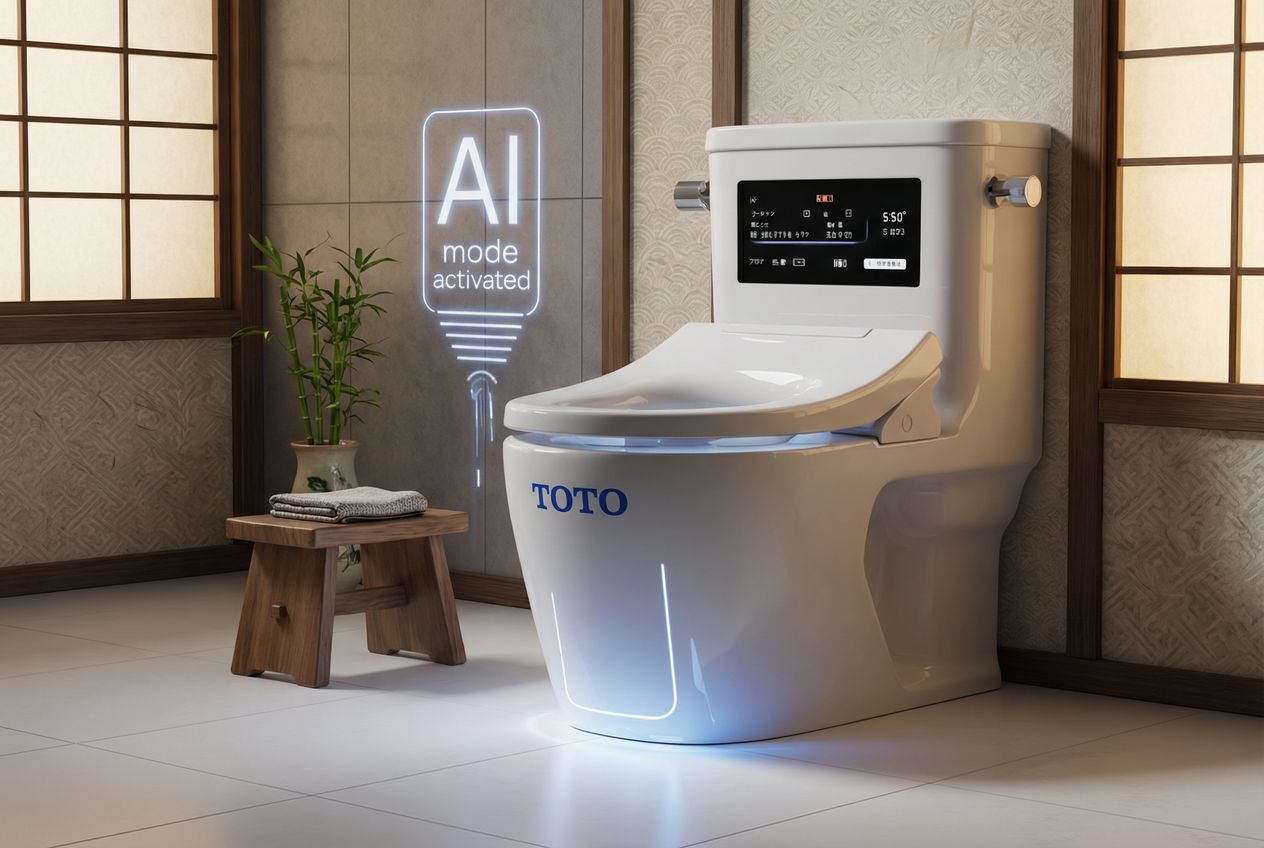
Clean business—in both industries
The Japanese toilet manufacturer Toto is known for heated toilet seats and high-tech bidets. Less well-known: the company has been producing ceramic components for chip manufacturing since 1988.
Now demand is exploding—and the stock along with it.
The Details
Goldman analysts upgraded Toto to "Buy."
The reason: Toto supplies specialized ceramic components that are essential for the production of high-end memory chips (NAND).
Toto’s semiconductor division already accounted for 42% of operating profit in fiscal year 2025—and the trend is rising. The stock gained 11%, its strongest increase in five years.
🔬 Good to know
Fine ceramics are lighter than metal, more heat-resistant, and do not cause electrical interference—ideal for chip production. Toto’s toilet know-how is paying off.
Toto is not alone. Traditional Japanese companies are occupying more and more AI niches:
Ajinomoto: The world market leader for MSG seasoning produces the insulating films without which no modern high-performance chip functions.
Kao: The cosmetics giant (facial cleansers) supplies the specialized chemical agents to clean wafers without residue after production.
📊 All details & data: Morning Brew, Japan Times, The Straits Times
OUR PARTNER
Dictate prompts and tag files automatically

Stop typing reproductions and start vibing code. Wispr Flow captures your spoken debugging flow and turns it into structured bug reports, acceptance tests, and PR descriptions. Say a file name or variable out loud and Flow preserves it exactly, tags the correct file, and keeps inline code readable. Use voice to create Cursor and Warp prompts, call out a variable like user_id, and get copy you can paste straight into an issue or PR. The result is faster triage and fewer context gaps between engineers and QA. Learn how developers use voice-first workflows in our Vibe Coding article at wisprflow.ai. Try Wispr Flow for engineers.
NUMBER OF THE DAY

This is how much rice South Koreans now eat on average per day. For the first time, consumption has fallen below the level of a standard bowl (150 g). 🍚
📉 Convenience beats tradition: While the traditional rice sack is disappearing from kitchens, the business of processed products is booming. Demand for instant rice and rice cakes rose by almost 7%.
MARKET BIT
TikTok deal sealed: U.S. future legally secured
TikTok has formally secured its future in the United States.
Just ahead of the statutory deadline, a new U.S. joint-venture structure was established, enabling the app to continue operating for more than 200 million American users.
The Details
For the first time, TikTok’s U.S. future rests on a legally binding structure with clearly defined ownership, data, and governance arrangements.
New structure: TikTok U.S. Data Security Joint Venture (USDS) is majority U.S.-owned.
Ownership: ByteDance retains a 19.9% stake, while Oracle, Silver Lake, and MGX act as managing investors with roughly 15% each.
Operations: U.S. user data will be stored domestically at Oracle. Content moderation and trust & safety responsibilities sit with the U.S. entity. The TikTok algorithm remains licensed from ByteDance but will be retrained on U.S. user data.
Background: Why the deal was necessary
A 2024 U.S. law would have banned TikTok without a change in ownership. After years of legal disputes and repeated deadline extensions, this arrangement represents the politically viable middle ground.
Donald Trump described the agreement as a “rescue of TikTok” and publicly thanked Xi Jinping for approving the deal.
Bottom line: TikTok remains active in the U.S. without a full separation from ByteDance. The U.S. gains control over data, moderation, and governance, while China retains economic exposure.
👉 Full story: CNN, Caixin Global, Aljazeera, StraitsTimes
WORD OF THE DAY
🇰🇷 Bapsim 밥심
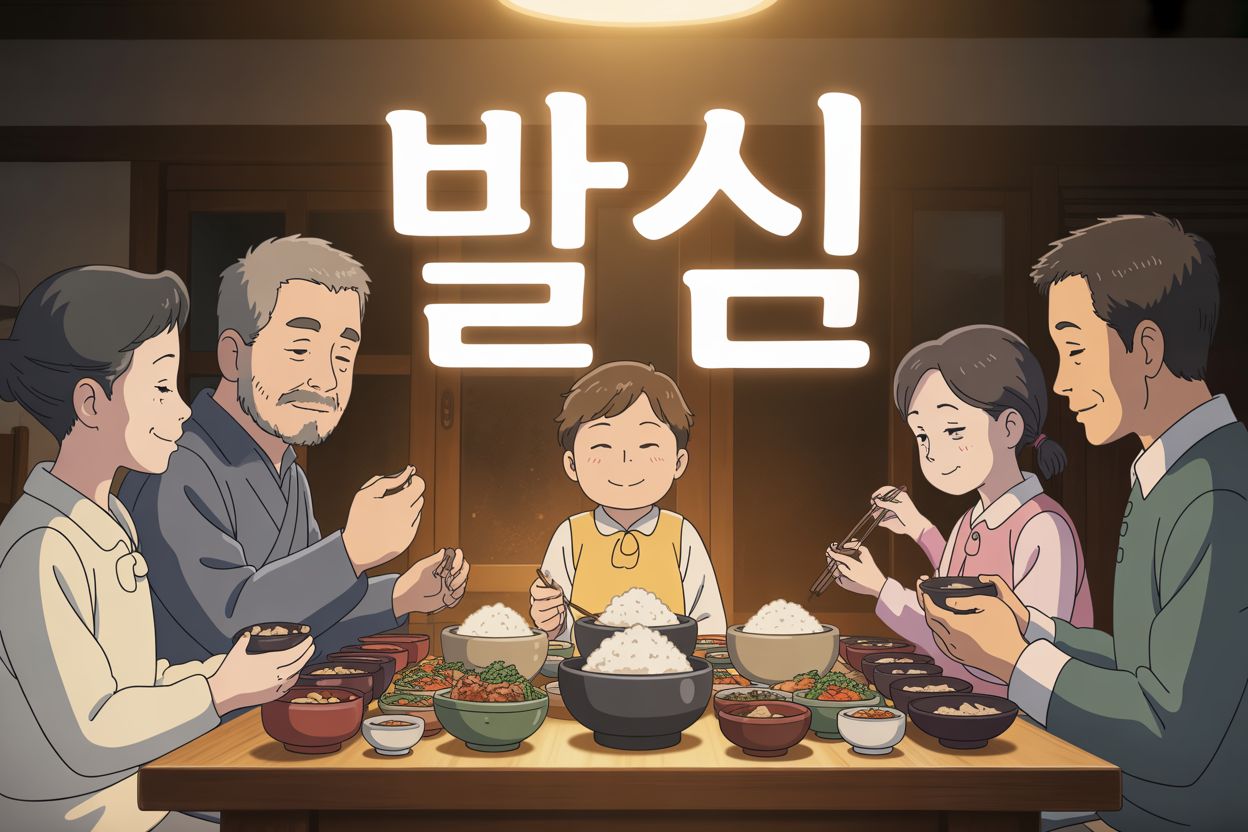
In Korea, bapsim literally means “the power of rice”, the long-held belief that real strength comes from a proper bowl of rice.
It reflects the idea that eating well fuels you not just physically, but mentally and emotionally, helping you power through long days, hard work, and life’s tougher moments.
But this centuries-old belief is starting to crack.
Farewell to Bapsim: Over the past 30 years, rice consumption has fallen sharply. The shift is driven by the rise of bread and pasta, along with a growing preference for Western-style diets and convenience foods.
What remains is a cultural tug-of-war between tradition and modern eating habits — and a bigger question: does strength still come from rice, or from variety?
ASIABITS CONNECT
How three people pull off what others need ten for.

If you’ve seen our podcast, you were probably just as surprised as we were by the insane production quality. That’s the work of our Philippine editor, Ralph.
👉 What we’ve learned: The best talent today can be found anywhere. Especially in Asia.
Asiabits connects you with hand-picked talent from across Asia — editors, designers, developers, VAs. Personally vetted. Ready to deploy.
→ Inquire now: [email protected]
HIGHLIGHTS
🇺🇦 Energy war reshapes supply chains: As Russia continues targeted attacks on Ukraine’s power grid, China became the country’s most important supplier of electrical equipment in 2025. About 86% of Ukraine’s imports in this segment came from China, mainly transformers for substations. It shows how deeply China’s industry is now involved in repairing infrastructure at Europe’s largest war front.
🇯🇵 Japan tests the Shinkansen of the future: JR Central is developing the L0 Series maglev train, designed to reach speeds of up to 603.5 km/h and cut travel time between Tokyo and Nagoya to 40 minutes. The multibillion-dollar project is years behind schedule and requires extensive tunneling and new infrastructure. In Europe, it would only make sense on a few business-heavy routes and remains unrealistic for now.
🧗 Free solo over Taipei: Alex Honnold climbed Taiwan’s landmark Taipei 101 without ropes or safety gear, reaching the 508-meter summit in 91 minutes, faster than planned. He rose to global fame through the documentary Free Solo, which shows his unroped ascent of Yosemite’s El Capitan in 2017. Netflix streamed the climb live with a 10-second delay as thousands cheered below. At the top, he simply said: “Sick.”
🤝 Google backs Japan’s AI unicorn: Google is investing in Sakana AI and forming a strategic partnership with Japan’s most valuable AI unicorn. Sakana will use Google’s Gemini models for its products while continuing to develop its own LLMs and maintaining a multi-model approach. For Google, the deal is a lever to anchor cloud and GenAI services in Japan’s conservative market.
FORTUNE COOKIE

Wishing you a confident start to the week. 😎
MORE ASIABITS
All the latest AI trends from Asia — every Wednesday, exclusively with us.
The Asiabits Podcast on YouTube.
The Asiabits Podcast on Spotify.
YOUR FEEDBACK
How do you like today's briefing? |