- asiabits
- Posts
- 🟠 How AI destroys jobs...
🟠 How AI destroys jobs...
...and creates new ones

☕️ Good morning friends,
We (Michael & Thomas) were invited to Tencent headquarters to use their version of OpenClaw.
And what can we say…? It brings us joy, but also fear again and again, to live in China. The speed here is simply breathtaking.
In today's issue:
Japan, Malaysia & China: Asia's AI divide
Tencent doubles AI budget
Vietnam attracts billions in FDI
Enjoy reading! 📰
P.S. Our partner CEIBS shows on March 25 in Shanghai how to take your career to the next level.
And the best part? We'll be there too. Register here.

KOSPI gives back 5% rally: Just one day after its strongest daily gain in months, the KOSPI fell -2.7% on Thursday after Israel struck Iran's South Pars gas field and Brent crude surged to $110. Fed Chair Powell also signaled no near-term rate cuts given rising inflation risks from oil prices.
TOP BIT
Asia's AI divide: China in panic, Malaysia booming, Japan stagnating
Asia is experiencing a historic reordering of the labor market in March 2026.
In China, thousands of laid-off tech workers are founding "one-person companies" (OPCs), and in Southeast Asia a symbolic milestone has been reached: tech salaries in Malaysia have overtaken the level in Japan for the first time.
Welcome to Asia's AI paradox: Three countries, one technology, three completely different realities.
China: "It feels like Squid Game"
Beijing is mobilizing the entire country for AI – but among workers, there's naked panic.
The state startup program:
Suzhou: 1,000 one-person startups by 2028, 30 "OPC Communities"
Shanghai Pudong: ¥300,000 ($44k) computing costs covered
Wuhan: Special loans + default protection for solo entrepreneurs
The flip side: 85.5% of Chinese worry about AI impact on jobs (11,814 respondents). "It feels like Squid Game," says a respondent from Shanghai. "You can be eliminated at any time."
His employer fired 30% of the workforce in 2025. Those who "didn't adapt to AI fast enough."
Malaysia: the silent winner
Tech salaries in Malaysia have overtaken Japan for the first time:
CTO Malaysia: ¥28 million ($176k), +27% YoY → Japan: ¥26 million, flat
IT Director Malaysia: ¥28 million → Japan: ¥25 million
R&D Director Malaysia: ¥18 million → Japan: ¥15 million
Grant Torrens, Hays Recruitment: "Malaysia's salary increase is structural, not cyclical." Reason: National Semiconductor Strategy (10-year plan), Penang chip hub, data center boom.
30% of Malaysian workers saw salary jumps >6% (highest rate in Asia). China firms + Western companies diversifying supply chains → talent war.
Japan: losing touch
The bitter irony: Japan has a skilled labor shortage but pays the worst.
56% of Japanese tech workers dissatisfied with salary (highest rate in Asia). 65% considering job change (also highest rate), main reason: "Limited career progression."
Asia is in AI fever, both in the positive and negative sense. The future will show which country can best exploit the opportunities and eliminate the risks.
All details & data: Nikkei Asia, Rest of World

MARKET BIT
Tencent doubles AI budget: +18% profit funds the next bet
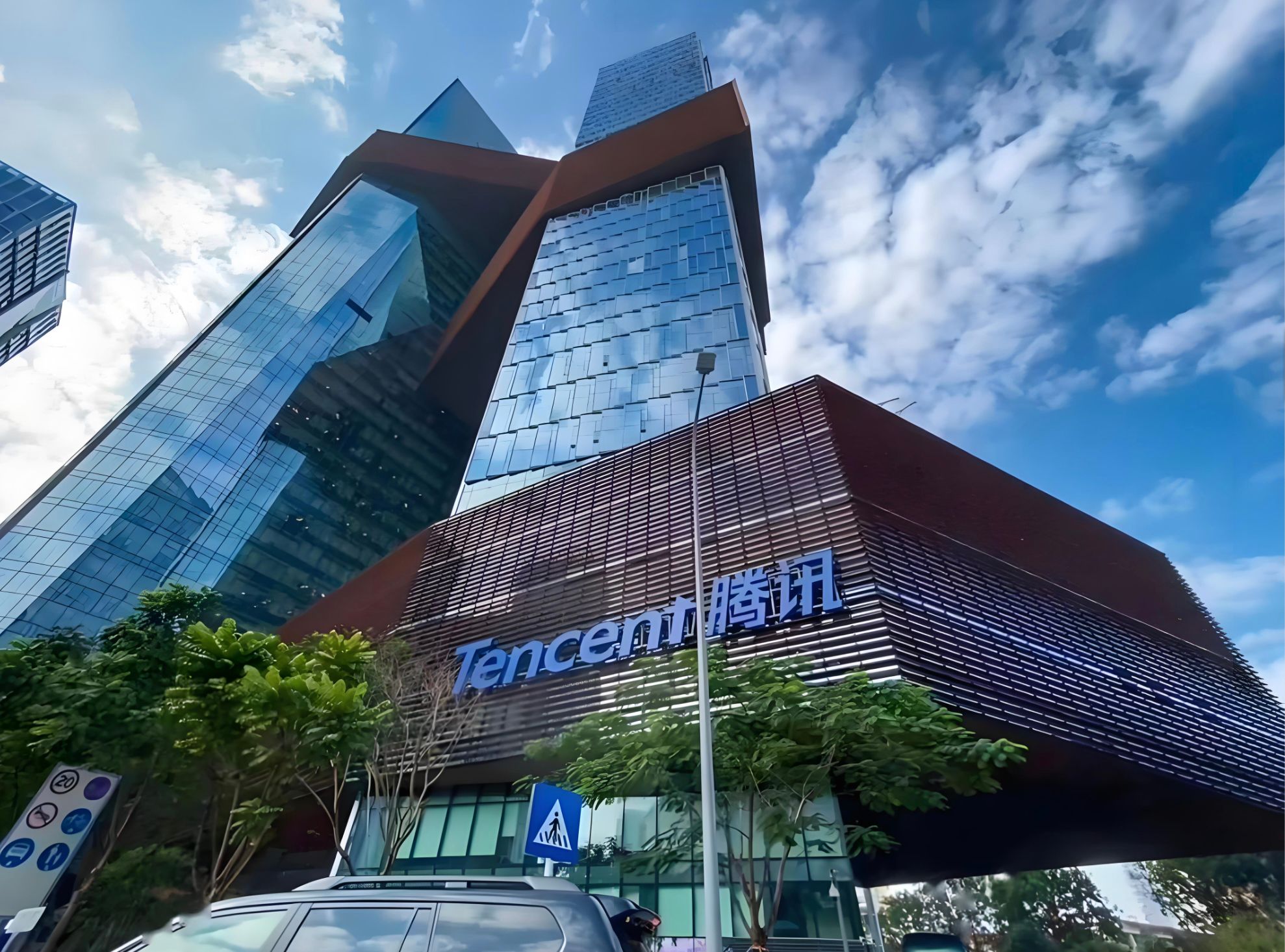
Tencent released its 2025 annual results yesterday, offering one of the clearest signs yet that for China’s tech giants, AI is no longer just a future bet, but is already making real money today.
The numbers:
Revenue: RMB 751.8 billion ($109 billion), +14%
Non-IFRS Operating Profit: RMB 280.66 billion ($40.7 billion), +18%
The details
In 2025, Tencent invested RMB 18 billion ($2.6 billion) into its two biggest AI products: the Hunyuan language model and the Yuanbao chatbot. More than RMB 7 billion ($1 billion) was spent in the fourth quarter alone.
In 2026, that amount is expected to more than double, financed by rising profits from the core business. President Lau described the spending as upfront investment to build a foundation, not as ongoing operating costs.
The RMB 18 billion also covers only Hunyuan and Yuanbao. AI initiatives in existing products and Tencent Cloud come on top of that.
AI push:
Hunyuan: Former OpenAI researcher Yao Shunyu is now leading Hunyuan development. Version 3.0 is close to release.
Yuanbao: RMB 1 billion advertising budget, 50 million daily users, 3.6 billion draws and 1 billion AI-generated tasks during Chinese New Year.
NEW: The new “OpenClaw” package combines QClaw (consumer), Lighthouse (developers), and WorkBuddy (enterprise).
At the same time, Tencent is developing its own AI agent for WeChat that is meant to operate Mini Programs autonomously.
The foundation
WeChat: 1.418 billion monthly active users (+2%). Monetization is picking up: Video Accounts +20% usage time, Mini Programs +70% transaction value in H2, payments available in 78 countries and 36 currencies.
Gaming remains the cash engine: +18% domestically and +33% internationally, reaching RMB 241.6 billion in total. The advertising business grew 19% to RMB 145 billion, as AI-powered ad targeting pushed prices higher.
The math checks out
Tencent is spending record sums on AI and is still becoming more profitable. AI is acting as a lever on top of the existing ecosystem: better ads, more efficient cloud services, smarter recommendations.
CEO Pony Ma puts it clearly: “Our highly resilient core businesses provide us with the resources to fund our increasing investments in AI.”
The planned doubling in 2026 is reinvestment into a cycle that is already generating returns.
Sources: Yicai Global, Tencent IR, DealStreet Asia, BusinessTimes
HIGHLIGHTS
🇨🇳 China's one-person AI startups: Chinese cities are outbidding each other with free apartments, subsidized computing power and special loans to attract solo founders who run entire companies with AI tools. Suzhou plans to build thirty OPC communities and cultivate 1,000 one-person enterprises by 2028. Shanghai's Pudong district covers computing costs up to 300,000 yuan (44,000 USD), Wuhan offers special loans with government-backed default protection.
🇰🇷 Samsung lands AMD deal for HBM4: Samsung Chairman Lee Jae-yong hosted AMD CEO Lisa Su for dinner in Seoul and sealed a cooperation agreement on AI chips. Samsung becomes the preferred HBM4 supplier for AMD's new AI accelerator Instinct MI455X, its first official HBM4 deal since shipments began in February. The two companies will also collaborate on DDR5 memory for AMD's Helios platform as well as foundry and packaging services. Samsung and AMD have worked together since 2007, starting with graphics card memory.
🇻🇳 Vietnam attracts billions in FDI: Vietnam registered over 6 billion USD in new foreign direct investment in the first two months of 2026, including a 1.2 billion USD project for high-tech circuit board manufacturing. Actual disbursements rose 8.8% to 3.2 billion USD. Among recent investors: GE Vernova chose Vietnam as the first Asian country to host its energy conference, the UAE's G42 is planning data centers worth around 2 billion USD. Starlink has also received approval for its satellite internet service in the country.
🇯🇵 Japan's startups go global: Japanese founders are increasingly seeking growth beyond their home market. In January, eight Japanese startups pitched at an exchange program in Dubai alongside delegations from India, Turkey and Saudi Arabia. Robotics startup Mujin secured the largest funding round of 2025 at 36.2 billion yen for US and European expansion. Overall, Japanese startups raised around 3.2 billion USD in 2025, up 12% year-on-year.
BEHIND THE BITS

Last week, thousands were still standing in line to have an IT specialist or engineer install OpenClaw for them.
Three days later, there's a version you can get running yourself in five minutes, including security features.
We were there at Tencent headquarters with five founder and entrepreneur friends and witnessed history.
We have the luck of being in the right place at the right time.
Have a great weekend!
MORE ASIABITS
Free guide: AI Automation for Beginners
Humanoid Robotics Report: The $6 Billion Bet
Interactive tool: China Dependency Index™
YOUR FEEDBACK
How do you like today's briefing? |