- asiabits
- Posts
- 🟠 EU: research ban for China
🟠 EU: research ban for China
+ Samsung achieves 6G record

☕️ Good morning friends,
Our new website is online.
And what can we say? Looks gigantic!
What awaits you there:
Free deep dives on topics like the DJI ecosystem or the Chinese robotics boom.
600+ insights: Every story we've ever written - searchable, categorized, readable. Your archive for everything about Asia's business & tech.
The Network: Our network of founders, investors, and experts working between East and West.
👉🏻 asiabits.com
Feel free to give us feedback on how we can improve even further.

Hong Kong rotates into AI pure plays: China’s AI startups Zhipu and MiniMax surged 25% and 16% after the holidays. Tech giants Alibaba (-4.3%) and Tencent (-2.8%) were sold off. Capital is rotating into pure AI names, while diversified platforms are seeing profit-taking.

TOP BIT
🇪🇺 EU raises the wall: research ban for China
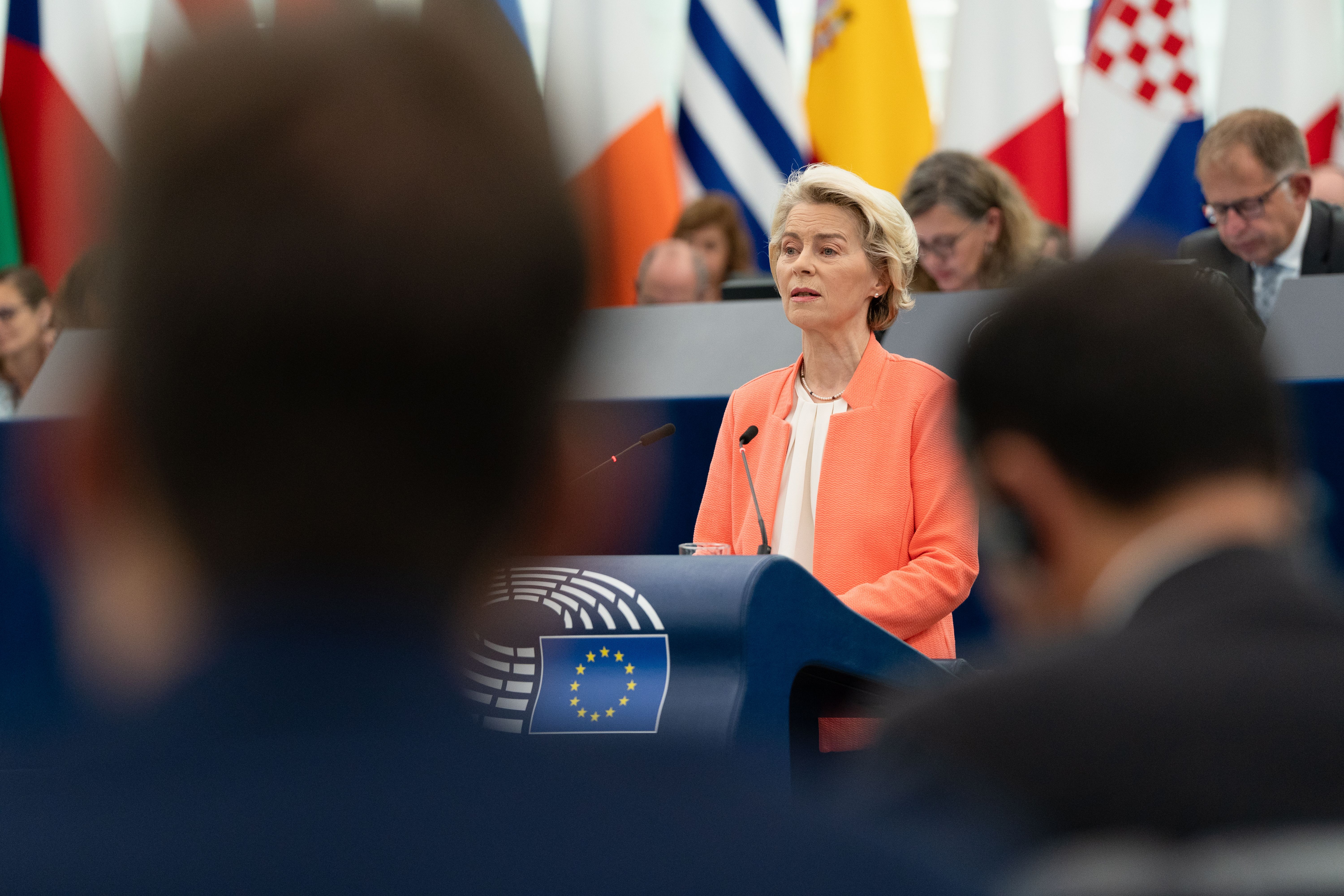
CC-BY-4.0: © European Union 2023– Source: EP
The EU has excluded Chinese organizations from critical areas of its flagship research program Horizon Europe starting in 2026.
The measure's goal: protecting intellectual property and securing Europe's technological sovereignty.
What gets excluded
The €93 billion program remains blocked for China in the following areas:
Area | Status | Details |
|---|---|---|
AI & quantum tech | 🚫 Blocked | Protection against technology leakage and military use. |
Semiconductors (chips) | 🚫 Blocked | Strategic independence in focus. |
Biotechnology | 🚫 Blocked | Security concerns regarding genetic data. |
Climate & energy | ✅ Permitted | Cooperation on global environmental goals continues. |
Agriculture | ✅ Permitted | Cooperation on biodiversity and food security. |
Reactions from China
"The policy will not harm China much and could make Europe appear more isolated."
Other experts warn: China is now the world's leading producer of AI research. The restrictions could long-term reduce EU access to Chinese talent and contribute to a more fragmented global research landscape.
📊 All details & data: SCMP, Horizon Programme (pdf), The Legal Wire
OUR PARTNER
Stop typing prompt essays

Dictate full-context prompts and paste clean, structured input into ChatGPT or Claude. Wispr Flow preserves your nuance so AI gives better answers the first time. Try Wispr Flow for AI.
MARKET BIT
Hyundai builds $7 billion future hub

Hyundai Motor Group will invest 10 trillion won (around $6.9 billion) over five years in Saemangeum, North Jeolla Province.
The goal: a future-focused cluster for AI, hydrogen and robotics on a 409-square-kilometer reclaimed land project, roughly two-thirds the size of Seoul.
The strategic context
The 10 trillion won commitment is part of Hyundai’s broader 125 trillion won domestic investment plan through 2030. Saemangeum is the first major concrete project under that roadmap.
Nvidia backbone: Hyundai is doubling down on AI infrastructure. Chairman Chung Eui-sun has already agreed with Jensen Huang to deploy 50,000 Blackwell GPUs.
That computing power is intended to accelerate autonomous vehicles, robotics and digital twins in manufacturing.
Hydrogen strategy: Hydrogen has been a core pillar of Hyundai’s long-term strategy for years. Solar-powered electrolysis would enable the production of “green” hydrogen.
Robotics is also central to the plan: from the humanoid Atlas to industrial wearables and mobile platforms. Saemangeum is set to become a testing ground for smart mobility and autonomous systems.
Why Saemangeum?
Ample land, strong solar conditions and political backing: Hyundai plans to build an AI data center, large-scale green hydrogen electrolysis facilities and robot manufacturing operations there. Local solar installations are also under consideration to generate and consume energy on site.
Beyond land and sunlight, aggressive investment incentives are a draw:
Long-term land leases at symbolic rates
Employment subsidies
Government support and coordination
Seoul is pushing to industrialize regions outside traditional hubs such as Ulsan — and Saemangeum is emerging as a flagship project.
👉 Full Story: Chosun, JoongAng Daily, TechInAsia
FOUNDERS INSIGHTS

"The robot itself only accounts for 1/5 of the costs."
How does a 23-year-old even end up in Shenzhen?
Raised between Switzerland and Chile, he skipped most of his school years to visit robotics labs at universities — and continued coding on planes with a dimmed screen.
At 23, he's now building a robot deployment platform between San Francisco and Shenzhen.
From this, he gained an insight that hardly anyone talks about: It's not the hardware that's slowing down robotics — it's system integration.
4/5 of the costs arise when you actually want to get the robots running.
China vs. USA
In the US, you negotiate contracts for months. In Shenzhen, he messaged the founder of a motor manufacturer directly — two hours later, he held the parts in his hand.
👉🏻 His conclusion: "The Chinese don't care if it's a white cat or a black cat. They just care that it catches the mouse."
HIGHLIGHTS
🇹🇭 Thailand becomes a drone hub for Russia: In the first 11 months of 2025, Russia imported $125 million worth of drones from Thailand. That accounts for 88% of Thailand’s total drone exports and is eight times more than the previous year. During the same period, China shipped $186 million worth of drones to Thailand. As recently as 2022, Thailand exported less than $1 million in drones in total — none of it to Russia.
🇨🇳 China builds a “reverse firewall” against foreign data collectors: A growing number of Chinese government websites are no longer accessible from outside the country. The geo-blocking specifically targets foreign data mining and open-source intelligence gathering by identifying users’ IP addresses. The signal: Beijing is deliberately tightening access to “public” data for researchers and businesses abroad.
🇰🇷 Samsung hits record speed in 6G trial: Samsung Electronics, together with KT and Keysight Technologies, achieved a 3 gigabits-per-second downlink speed in the 7GHz band — the fastest result reported so far at that frequency. The technology uses eight simultaneous data streams between the base station and the device. The 7GHz band is seen as a promising candidate for 6G, offering greater bandwidth and higher data rates than 5G’s 3.5GHz band.
🇮🇳 Tech giants pour billions into India’s AI push: At the India AI Impact Summit, Microsoft announced plans to invest $50 billion in AI across the Global South by the end of the decade. Reliance plans $110 billion for data centers, while Adani targets $100 billion for AI infrastructure over the next ten years. Blackstone invested $600 million in Indian AI infrastructure firm Neysa, and OpenAI and AMD announced partnerships with the Tata Group.
FORTUNE COOKIE

We hope your weekend was this relaxing. 🛁
MORE ASIABITS
The Asiabits Podcast on YouTube.
The Asiabits Podcast on Spotify.
YOUR FEEDBACK
How do you like today's briefing? |