- asiabits
- Posts
- 🟠 China's exports explode
🟠 China's exports explode
Why?

☕️ Good morning friends,
For the first time in 6 years, you can take the train from China to North Korea again. Well, now we know where our next Asiabits company outing is going… 😉
In today's issue:
China's export machine runs at full speed
Hyundai subsidiary Boston Dynamics plans IPO
Middle East war slows Hong Kong IPOs
P.S. Have you read our report on the DJI ecosystem yet? Super fascinating!

KOSPI rebounds: After Trump said the Iran war is "very complete," South Korea's benchmark index jumped back to 5,532 points. Samsung +8.3%, SK Hynix +12.2%.
Unprecedented volatility: fifth consecutive day with swings of more than 5%.

TOP BIT
China’s exports are exploding despite Trump tariffs
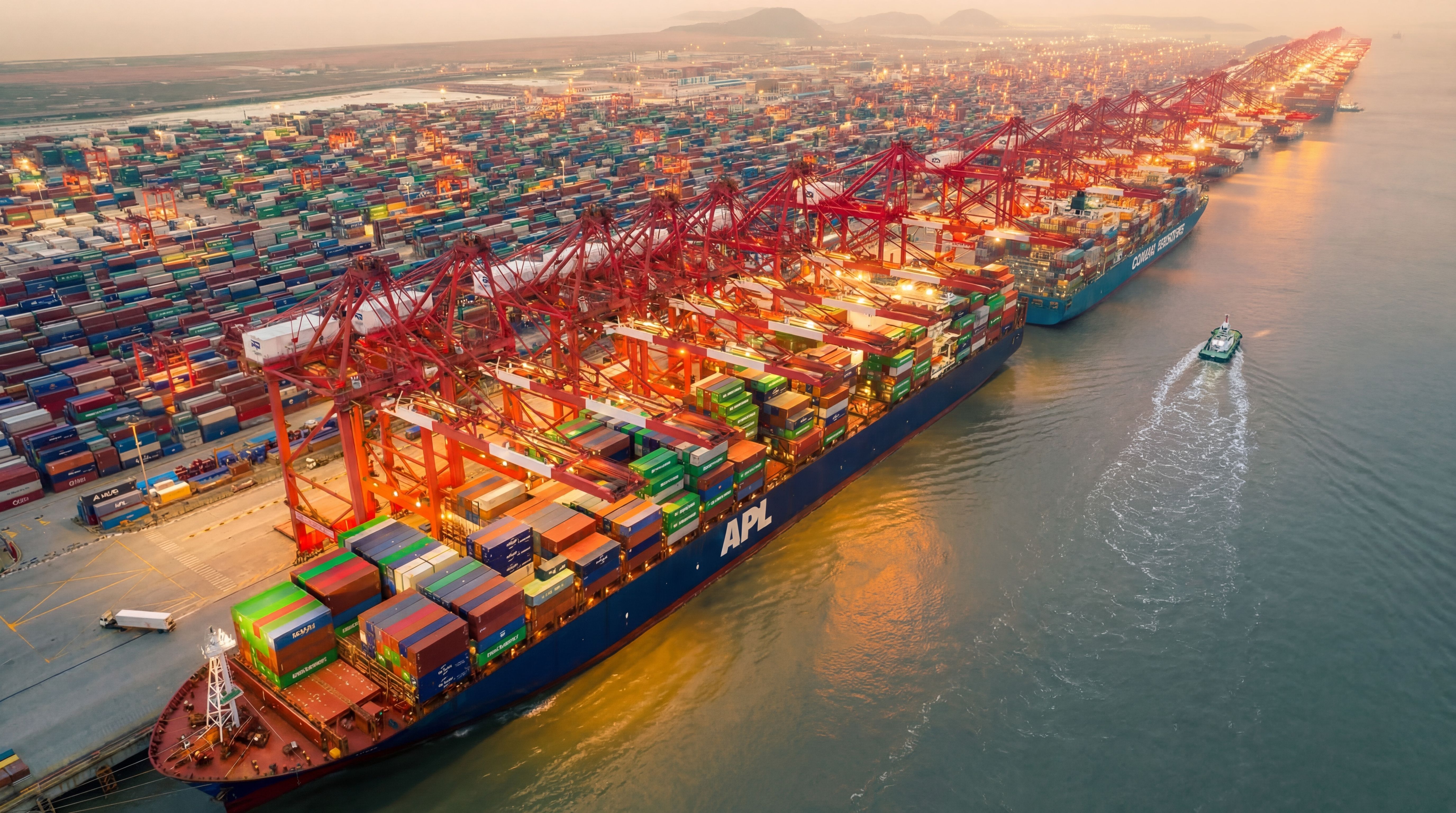
China’s export machine is running at full speed. In January and February, exports rose by 21.8%, three times stronger than economists had expected.
The trade surplus of $213.6 billion is the highest two-month figure ever recorded.
The numbers in context
China traditionally combines the data for January and February to smooth out holiday effects from the Lunar New Year.
Analysts had forecast growth of 7.1%, and both Reuters and Bloomberg missed the mark. Instead of slowing after the record year of 2025, with a surplus of $1.2 trillion, the pace is accelerating.
Import growth: With an increase of 19.8%, China’s domestic market is also showing surprising resilience despite the property crisis.
The great detour
The trend toward the “de-Americanization” of Chinese trade flows is accelerating. Beijing is finding new buyers at record speed.
Region | Growth | Significance |
|---|---|---|
EU | +27.8 % | Germany, France, and Italy all up 30% |
ASEAN | +29.4 % | Largest trading partner as a bloc |
Africa | +50 % | Most dramatic expansion |
USA | -11 % | But an improvement from -30% in December |
The pattern is even more drastic on the import side: China is buying 43% more from India and 36% more from South Korea, but 27% less from the US.
Tech as the turbocharger
One driver stands out: semiconductors and technology exports. The global AI boom is pulling demand for Chinese chips and components higher.
“The strength in integrated circuits fits with the AI investment boom,” says Xu Tianchen, Senior Economist at the Economist Intelligence Unit.
OUR PARTNER
Leadership Can’t Be Automated

AI can help you move faster, but real leadership still requires human judgment.
The free resource 5 Traits AI Can’t Replace explains the traits leaders must protect in an AI-driven world and why BELAY Executive Assistants are built to support them.
MARKET BIT
Boston Dynamics IPO: Hyundai's $13.6B lever for corporate restructuring

Hyundai Motor Group is preparing to list its US robotics subsidiary Boston Dynamics on the Nasdaq.
What looks like a tech IPO on the surface is actually a strategic maneuver: Group Chairman Chung Euisun needs the money to untangle Hyundai's complex cross-shareholding structure.
Chung's personal 20% stake in Boston Dynamics: estimated $13.6 billion (20 trillion won).
The details
Hyundai acquired Boston Dynamics from SoftBank in June 2021. Group affiliates paid $660 million for 60%, Chung personally added another 20%. Combined, the group holds 80%.
The pressure to list is mounting: At the time of acquisition, Hyundai committed to taking Boston Dynamics public within four years. That deadline lapsed in June 2025, giving SoftBank the right to exercise a put option until June 2026.
Hyundai is serious about this step: The company has already set up a dedicated robotics and AI task force under Vice Chair Chang Jae-hoon. In February 2026, Boston Dynamics' CEO also stepped down to refocus on profitability.
Why this isn’t really about robots
Hyundai is the last major Korean chaebol still operating with a circular ownership structure. At the top sits parts-maker Hyundai Mobis, which controls Hyundai Motor with a roughly 22.4% stake. Chung himself holds just 0.3% of Hyundai Mobis.
To secure long-term control, Chung needs to increase his Mobis stake by buying out shares from Kia and Hyundai Steel. On top of that, inheritance and gift taxes on his father's shares will eventually come due.
All of this costs billions, and the Boston Dynamics IPO is supposed to provide exactly that.
👉 Sources: Korea Herald, The Investor
CHART OF THE WEEK
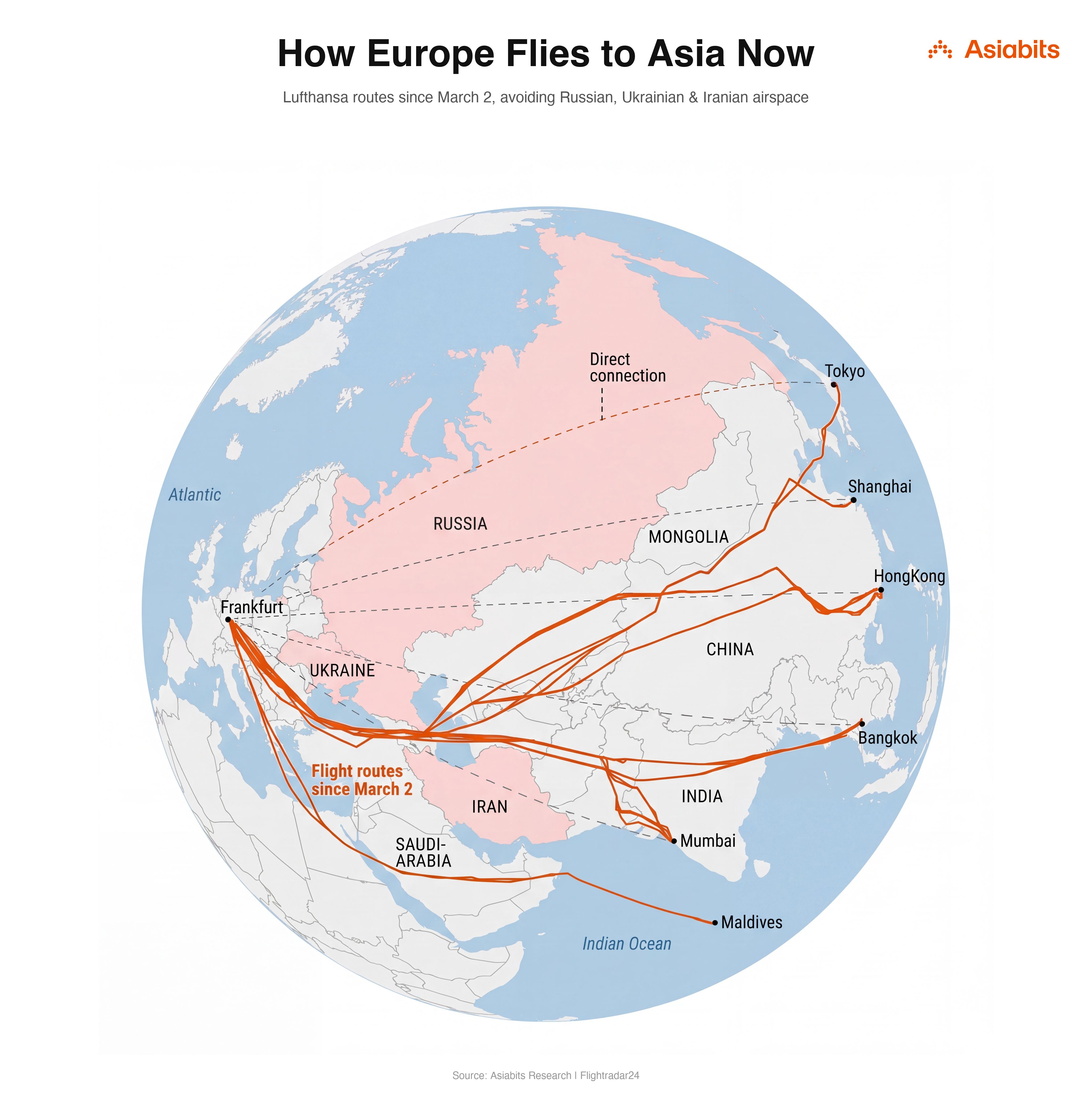
Inspiration: Zeit Online (DE)
HIGHLIGHTS
🚢 LNG tankers change course mid-Atlantic: Since early March, at least seven LNG carriers originally bound for Europe have changed course for Asia mid-voyage. Asian LNG spot prices have doubled to 24.80 USD per million BTU since the US strikes on Iran, well above the European level of 20-21 USD. Taiwan and South Korea are most exposed: both depend on millions of tons of LNG from the Middle East but can neither produce their own gas nor import via pipeline.
🇰🇷 Samsung SDI unveils batteries for humanoid robots: At InterBattery 2026 in Seoul, Samsung SDI is presenting its first pouch-type solid-state battery designed for humanoid robots and AI data centers. Solid-state batteries are considered the next major leap in battery technology: higher energy density, faster charging, and safer than conventional lithium-ion cells. Samsung SDI plans to begin mass production in 2027, positioning itself as one of the first suppliers for the growing physical AI sector.
🇨🇳 China issues second warning on OpenClaw: China's cybersecurity agency has again flagged security and data risks tied to OpenClaw, an AI agent currently being adopted by local governments and tech companies across the country. Improper installations have already led to serious security vulnerabilities. At the same time, major cloud providers are advertising one-click deployment, which compounds the problem: the easier the setup, the less users bother with security.
🇭🇰 Mideast war puts brakes on Hong Kong IPOs: The first three Hong Kong listings since the outbreak of the Middle East conflict got off to a bumpy start. Industrial robot maker Estun and pooling service provider Alsco both opened below their offer price, with only Shenzhen-based micro-drive maker Zhaowei gaining about 4%. The debuts were seen as a litmus test for Hong Kong's IPO pipeline, which had picked up strongly earlier this year. For companies still waiting to list, the mixed results may prompt a rethink on timing.
MORE ASIABITS
Free guide: AI Automation for Beginners
Humanoid Robotics Report: The $6 Billion Bet
Interactive tool: China Dependency Index™
YOUR FEEDBACK
How do you like today's briefing? |